
AUTOMATED NDT SYSTEMS
Six-axis articulated robotic inspection systems for full volumetric coverage of complex-geometry components — delivering the precision, repeatability, and defect detection performance that critical industries demand.
Request a System Consultation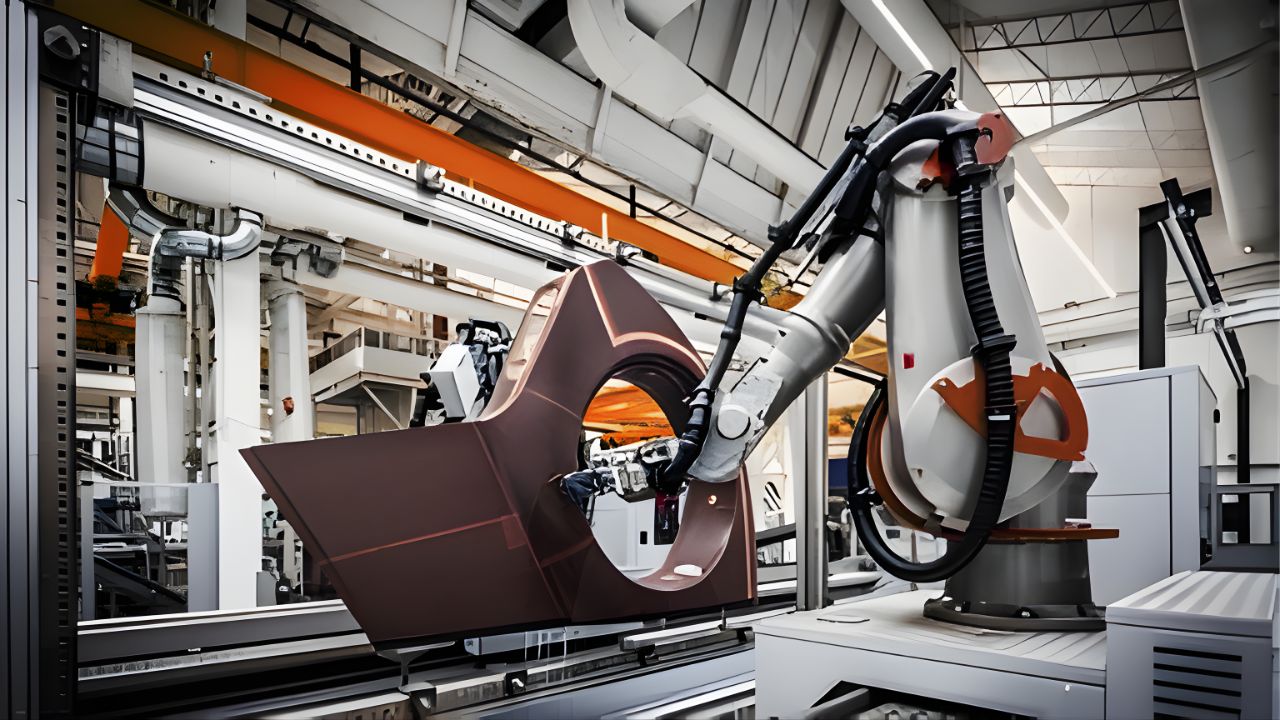
Complex-geometry components — turbine blades, aero-engine disks, forged rings, structural titanium parts, composite structures — present inspection challenges that conventional Cartesian scanners cannot reliably address. Surface curvature, variable wall thickness, internal cavities, and tight geometric tolerances demand an inspection system that moves with the part, not against it.
Altair Systems' Robotic Ultrasonic Immersion Systems combine six-axis articulated robotic motion with water immersion ultrasonic testing to deliver surface-adaptive, fully volumetric inspection across the most challenging component geometries. The system maintains optimal probe-to-surface normal incidence throughout the scan path — ensuring consistent acoustic coupling, accurate defect detection, and reliable sizing across every point of the inspection volume.
From a single turbine blade to high-throughput production inspection of forged billets, our robotic immersion systems are engineered around your component geometry, your inspection standard, and your production requirement.
TECHNICAL CAPABILITIES
Engineered for Accuracy. Configured for Your Component.
Every Robotic Ultrasonic Immersion System we design begins with your component — its geometry, material, applicable inspection standard, and production environment. No two systems are identical, because no two inspection requirements are the same.
Capabilities
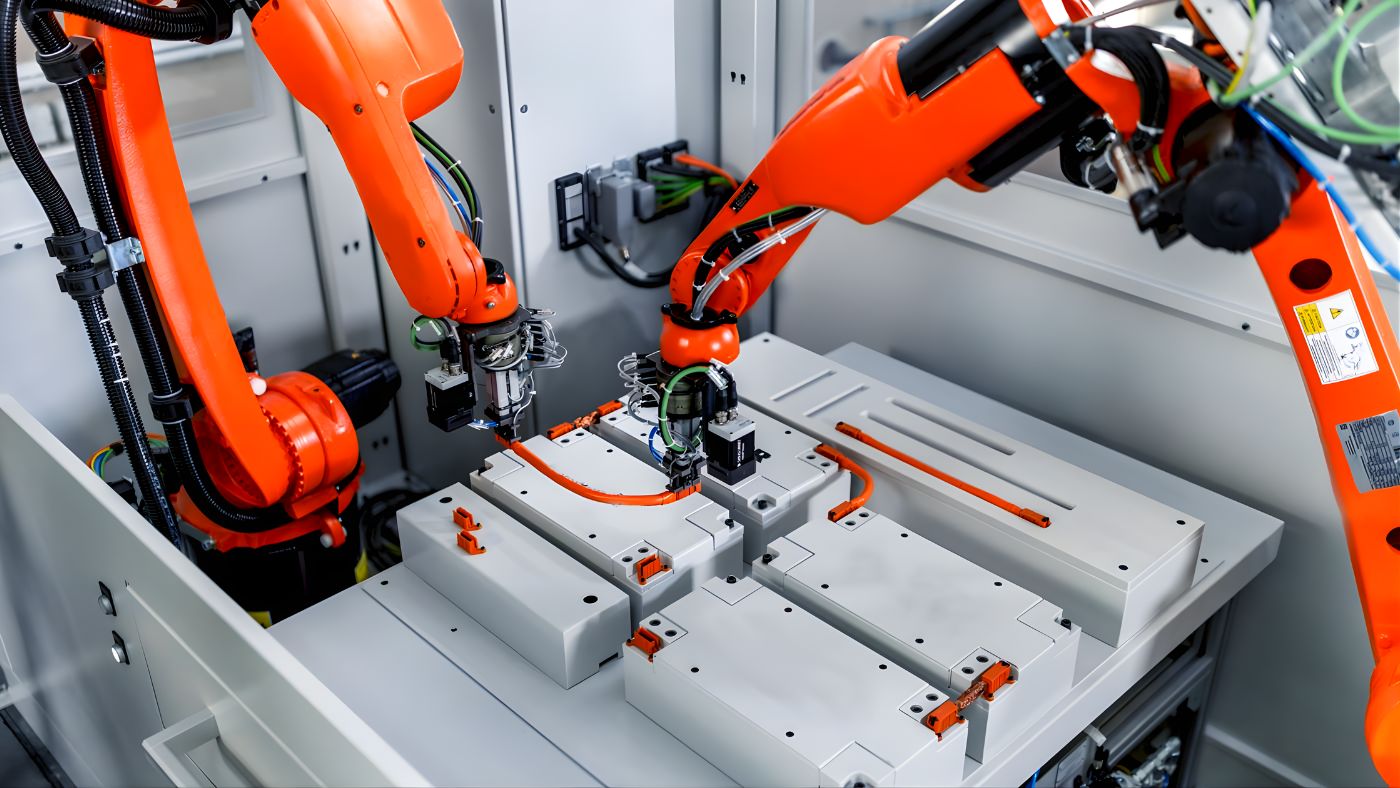
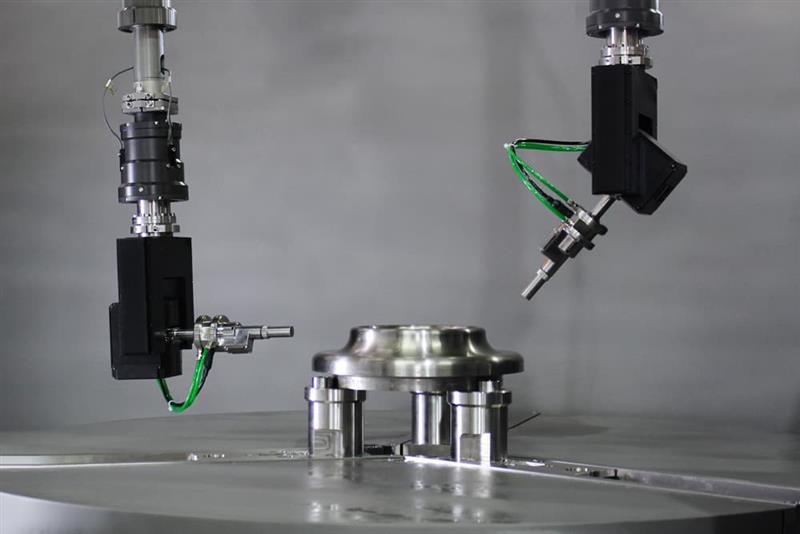
Robotic Configuration Six-axis articulated robotic arm — fully programmable motion path with surface adaptive scan trajectory generation. Dual-robot configurations available for simultaneous multi-zone inspection or through-transmission ultrasonic (TTU) applications.
Ultrasonic Methods Supported
APPLICATIONS
Our robotic ultrasonic immersion systems are deployed across industries where component integrity is safety-critical and inspection requirements are defined by the most rigorous international standards.
Aerospace Engine Components Turbine blades, compressor blades, vanes, disks, spools, shafts, and bearing races. Inspection to AMS, ASTM, EN, and OEM-specific standards. Surface-adaptive scan path maintains normal incidence on aerofoil profiles and complex blade root geometries.
Structural Forgings & Castings Titanium and nickel alloy forgings, aluminium structural billets, large rings and near-net-shape components. Full volumetric inspection to ASTM A388, EN 10228, AMS 2632, and equivalent standards.
Composite Structures Carbon fibre reinforced polymer (CFRP) panels, honeycomb sandwich structures, bonded assemblies. Single-sided or through-transmission configurations for delamination, void, and disbond detection.
Power Generation Components Rotor disks, impellers, turbine shafts, and high-integrity pressure vessel components. Immersion UT with PAUT for complete volumetric evaluation during manufacture and periodic in-service inspection.
Defence & Nuclear Components High-integrity structural components requiring full audit-trail documentation, SNECMA/GE/RR-referenced procedures, or nuclear pressure boundary requirements.
PROCESS
Steps:
1. Application Engineering & Scan Plan Development Our NDT application engineers define the inspection methodology — probe selection, frequency, focal depth, scan resolution, and scan path geometry — using simulation tools including CIVA modelling software to validate probability of detection (PoD) before system build. The scan plan is qualified against applicable inspection standards and customer acceptance criteria.
2. Robot Path Generation & Optimisation Surface geometry of the component is imported via CAD model. The robot scan trajectory is programmed to maintain optimal probe-to-surface normal incidence at every scan position. Path optimisation ensures consistent scan index spacing, minimal scan time, and collision-safe motion throughout the inspection volume.
3. Calibration & System Qualification Reference blocks and calibration standards — machined to applicable code requirements — are used for system sensitivity calibration, distance-amplitude correction (DAC) or time corrected gain (TCG) setup, and acceptance threshold verification. Full calibration data is logged within the inspection software.
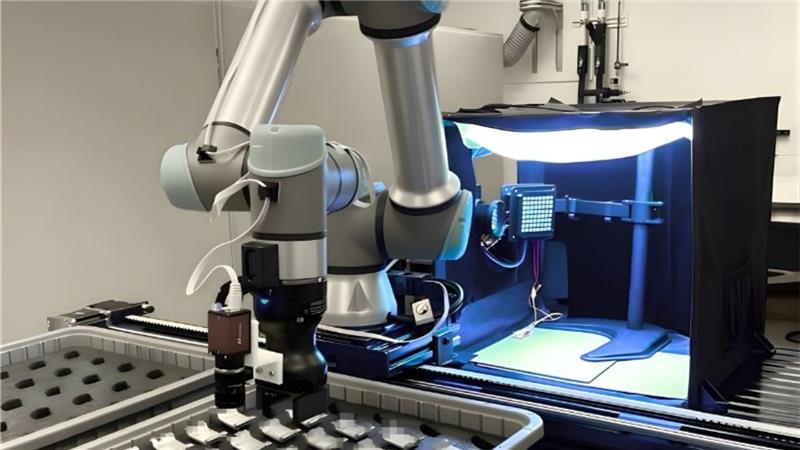
4. Automated Scan Execution The robotic system executes the programmed scan path with encoder synchronised data acquisition. Real-time A-scan, B-scan, and C-scan data is displayed during scanning. The system flags out-of-tolerance data in real time, enabling immediate operator awareness without post-scan reprocessing delay.
5. Data Evaluation & Reporting Acquired inspection data is evaluated within the unified software platform. Defect indications are characterised, sized, and mapped to their precise spatial coordinates. The system generates a full, traceable inspection report — including calibration records, scan coverage maps, and indication log — suitable for submission to quality or regulatory bodies.
SYSTEM FEATURES
Precision Engineering at Every Level of the System
WHY ALTAIR SYSTEMS
The performance of a robotic ultrasonic immersion system depends entirely on the quality of the engineering decisions made before a single component of the machine is built — probe selection, scan geometry, path optimisation, and qualification methodology. These are NDT application decisions, not mechanical ones.
Altair Systems brings NDT application expertise to the centre of every system we engineer. Our team understands the inspection standards, the material properties, the defect populations, and the acceptance criteria your components require — and we build systems that are validated against them from day one.
We partner with you through the full system lifecycle: from application review and scan plan simulation through system build, factory acceptance testing, site commissioning, procedure qualification, and ongoing technical support.