
AUTOMATED NDT SYSTEMS
Multi-axis immersion tank systems engineered for precision C-scan imaging and complete volumetric inspection of billets, forgings, plate, composites, and precision-machined components — configured to your inspection standard and production throughput.
Request a System Consultation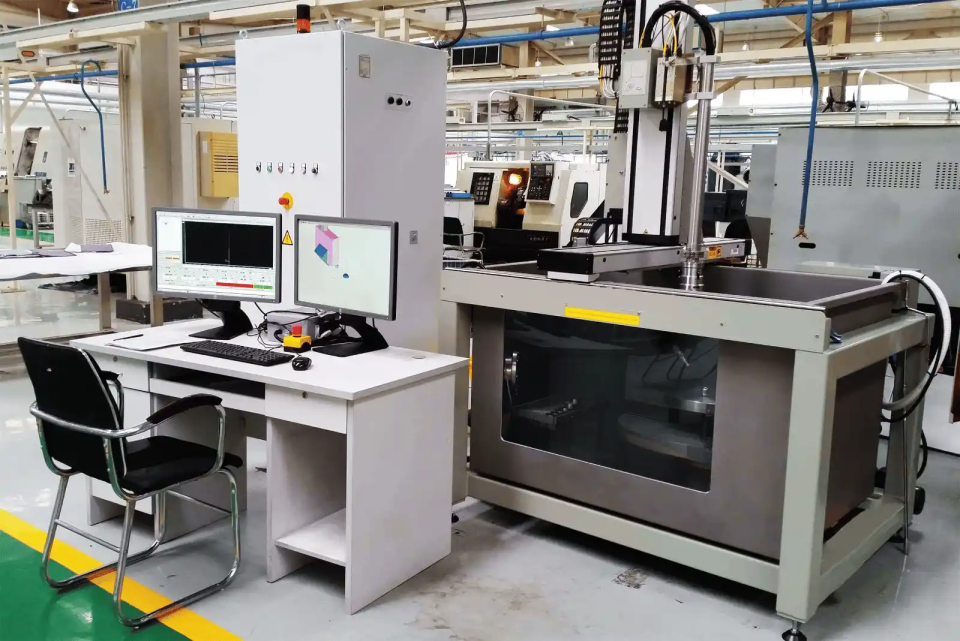
Immersion ultrasonic testing remains the most widely adopted method for precision volumetric inspection of critical industrial components. The water immersion coupling medium eliminates the variability of direct contact scanning, delivers consistent acoustic coupling across the entire inspection surface, and enables the high-frequency transducer configurations needed for fine-grain defect resolution and accurate sizing.
At Altair Systems, we engineer immersion UT systems that go beyond standard tank-and-gantry configurations. Every system is designed around the specific component range it will inspect — tank dimensions, gantry configuration, number of axes, probe handling, scan resolution, throughput, and integrated software — to deliver inspection data that meets the most demanding quality and traceability requirements.
Our immersion UT systems are deployed in precision manufacturing, aerospace, power generation, oil and gas, and heavy industry environments across Asia and the Middle East.
SYSTEM CONFIGURATIONS
Standard Builds. Custom Engineering. Every Configuration Purpose-Built.
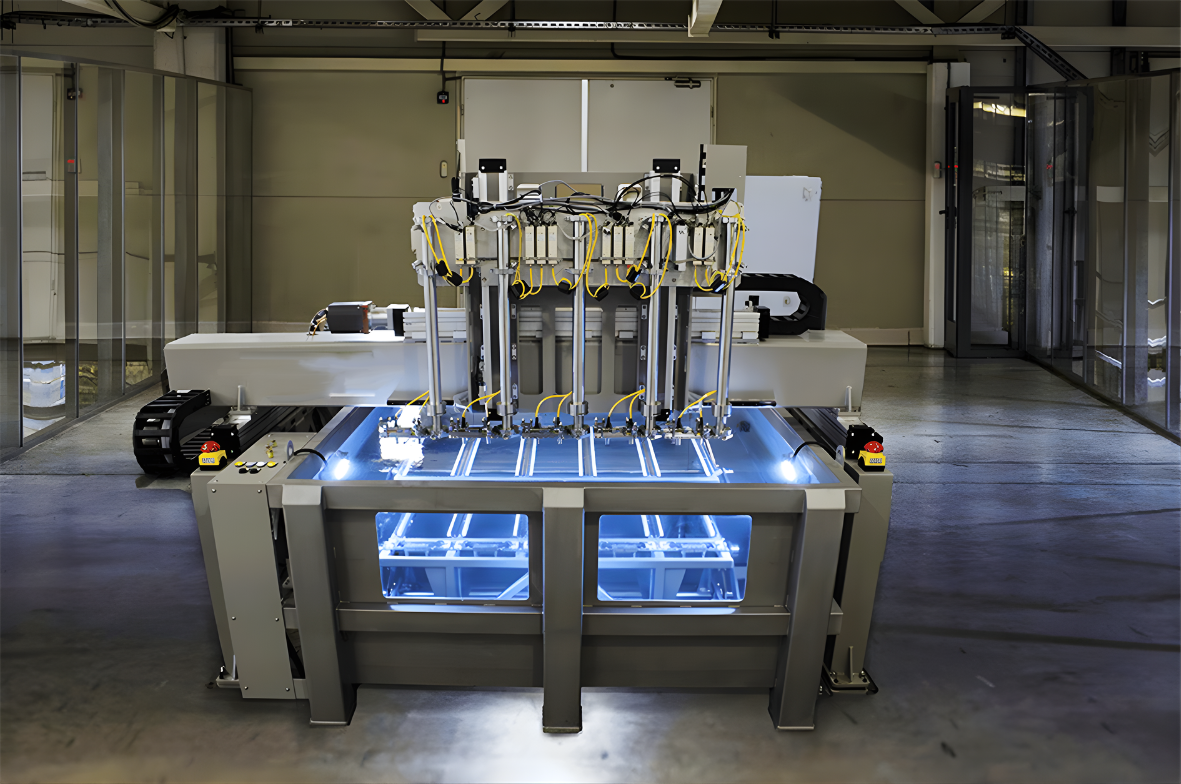
Bridge Gantry Immersion System (2–5 Axis) The workhorse of production immersion UT. A precision Cartesian bridge-gantry scanner traverses above a fixed immersion tank, delivering high-accuracy X-Y-Z scanning with optional rotary axes for cylindrical or complex part profiles. Available in compact single-part configurations through to large multi-bay production systems. Typical Applications: Plate, bar and billet inspection; forged disc and ring inspection; precision-machined components; composite panel inspection.
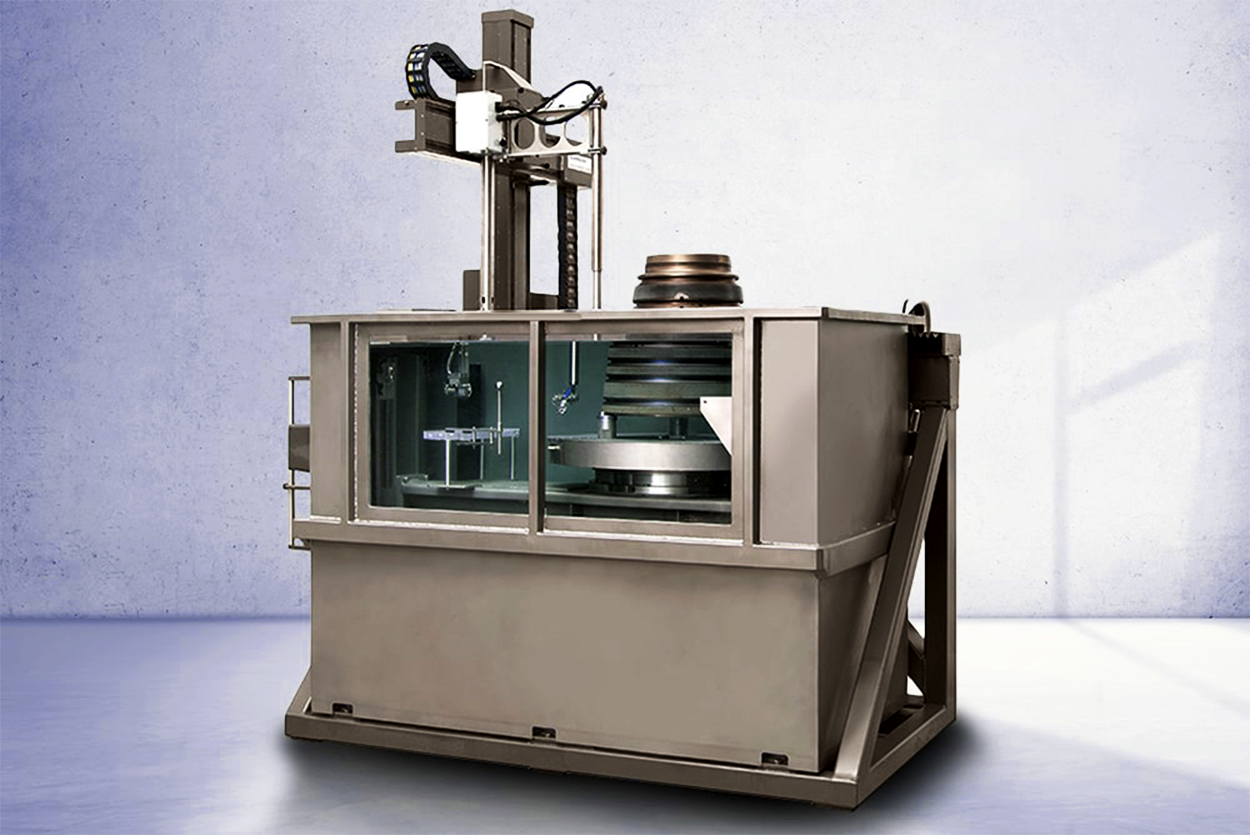
Column & C-Frame Immersion Systems Vertical or horizontal column configurations for smaller, precision components requiring stable, vibration-free scan mechanics. Particularly suited to aerospace engine components, bearing rings, and laboratory-environment inspection requirements. Typical Applications: Turbine disks, bearing races, precision forgings, medical implant components.
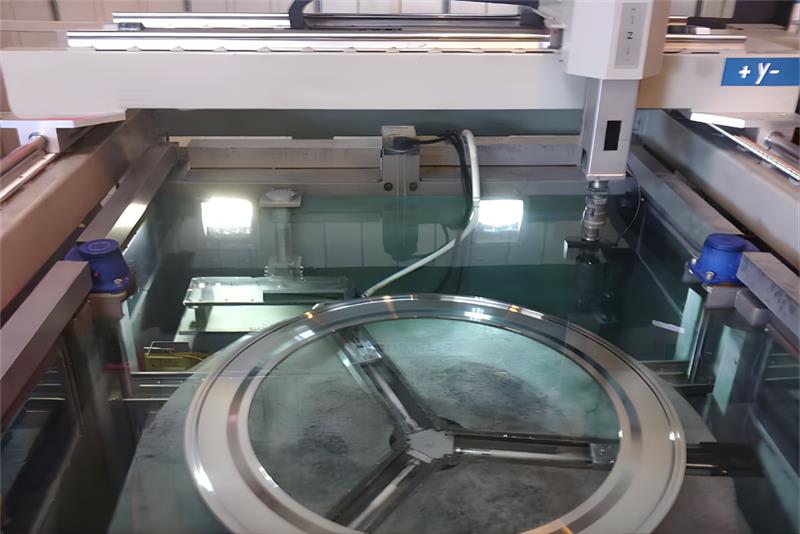
Rotary / Turntable Immersion Systems Servo-driven rotating part positioner combined with linear probe axis — optimised for rotary-symmetrical components where circumferential scan coverage and high throughput are both required. Unique chucking designs accommodate large rotary parts with access to all surfaces. Typical Applications: Forged disks and rings, compressor and turbine rotor stages, shaft sections, cylindrical billets.
Multi-Bay Production Immersion Systems High-throughput production inspection cells with integrated part handling, multiple immersion bays, and fully automated scan-and-evaluate workflow. Designed for 100% volumetric inspection at production rate. Typical Applications: Aerospace structural plate and billet, aluminium and titanium alloy production inspection, inline manufacturing quality control.
NDT METHODS
APPLICATIONS
Inspection-Grade Performance Across the Full Component Range
Billets & Bar Stock Full volumetric inspection of round and rectangular billets, bars, and ingots in aluminium, titanium, nickel, and steel alloys. Inspection to ASTM A388, AMS 2631, EN 10228, or customer-specific material acceptance standards. Multi-transducer configurations enable simultaneous longitudinal, shear, and radial inspection in a single pass. Forgings & Near-Net-Shape Components Multi-axis immersion scanning of complex forged shapes — disks, rings, shafts, impellers, and near-net profiles — with custom fixture and part-holding solutions to ensure complete access to all inspection zones. Inspection records linked to forging batch and heat number for full material traceability.
Aerospace Structures & Plate Large-format immersion systems for aluminium, titanium, and composite structural plate. Through-transmission configurations for composite panels. C-scan imaging of full plate area with resolution down to sub-millimetre defect sizing.
Precision Machined Components High-resolution immersion scanning of machined components where surface condition, tight dimensional tolerances, and complex internal geometry demand focused beam configurations and sub-millimetre scan index spacing.
Weld Inspection Immersion UT for weld seam inspection on pressure vessels, nozzles, and fabricated assemblies — delivering reliable fusion-zone coverage and PAUT/TOFD combinations for full volumetric evaluation in compliance with ASME, EN ISO, and API codes.
SOFTWARE
Altair Systems' immersion UT systems are delivered with a unified inspection software platform that manages the complete inspection workflow — from calibration and scan execution through to real-time data display, defect evaluation, and final reporting.
Software Capabilities:
Scan plan setup, probe calibration, and sensitivity verification with guided calibration wizards Real-time A-scan, B-scan, C-scan, and D-scan display during scan execution
Automated gate-based defect detection with real-time flagging of out-of-tolerance indications
Post-acquisition data analysis, indication characterisation, and defect sizing tools
Distance Amplitude Correction (DAC) and Time-Corrected Gain (TCG) calibration management
Full inspection report generation — calibration records, scan maps, indication log, and acceptance/rejection summary
DICONDE-compatible data format for integration with customer
QMS and third-party analysis tools
NDE 4.0-ready: API data export, cloud reporting interface, and digital twin data feed options
WHY ALTAIR SYSTEMS
Many immersion UT systems are sold as standard products and adapted — often inadequately — to the customer's inspection requirement. Altair Systems takes a different approach. We begin with the inspection problem: the component geometry, the material, the applicable standard, and the production throughput. The system is then engineered to meet that requirement precisely.
Our capability spans compact single-component laboratory systems through to large multi-bay production inspection cells — all designed, built, commissioned, and supported by the same team that engineered them.